Almost every first conversation we have with a new brand starts the same way: what’s your minimum? It is a fair question, but the number on its own tells you very little. A pickleball paddle MOQ is not a sales target a factory picked out of the air — it is the point where the fixed costs of setting up a production run stop swamping the cost of the paddles themselves.
Once you understand which of those fixed costs apply to your specific project, the number becomes negotiable in a way that “can you do 50?” never is. A buyer who says “I’ll take your stock shape and stock edge guard colour so we skip the tooling and the extrusion run” gets a different answer from one who wants a bespoke mould at 80 pieces.
This guide walks through where minimums actually come from on a factory floor, then compares what a 100-, 300- and 500-piece commitment realistically gets you in unit cost, customisation depth and downside risk.
Where the minimum actually comes from
Moulds get paid for once, then amortised
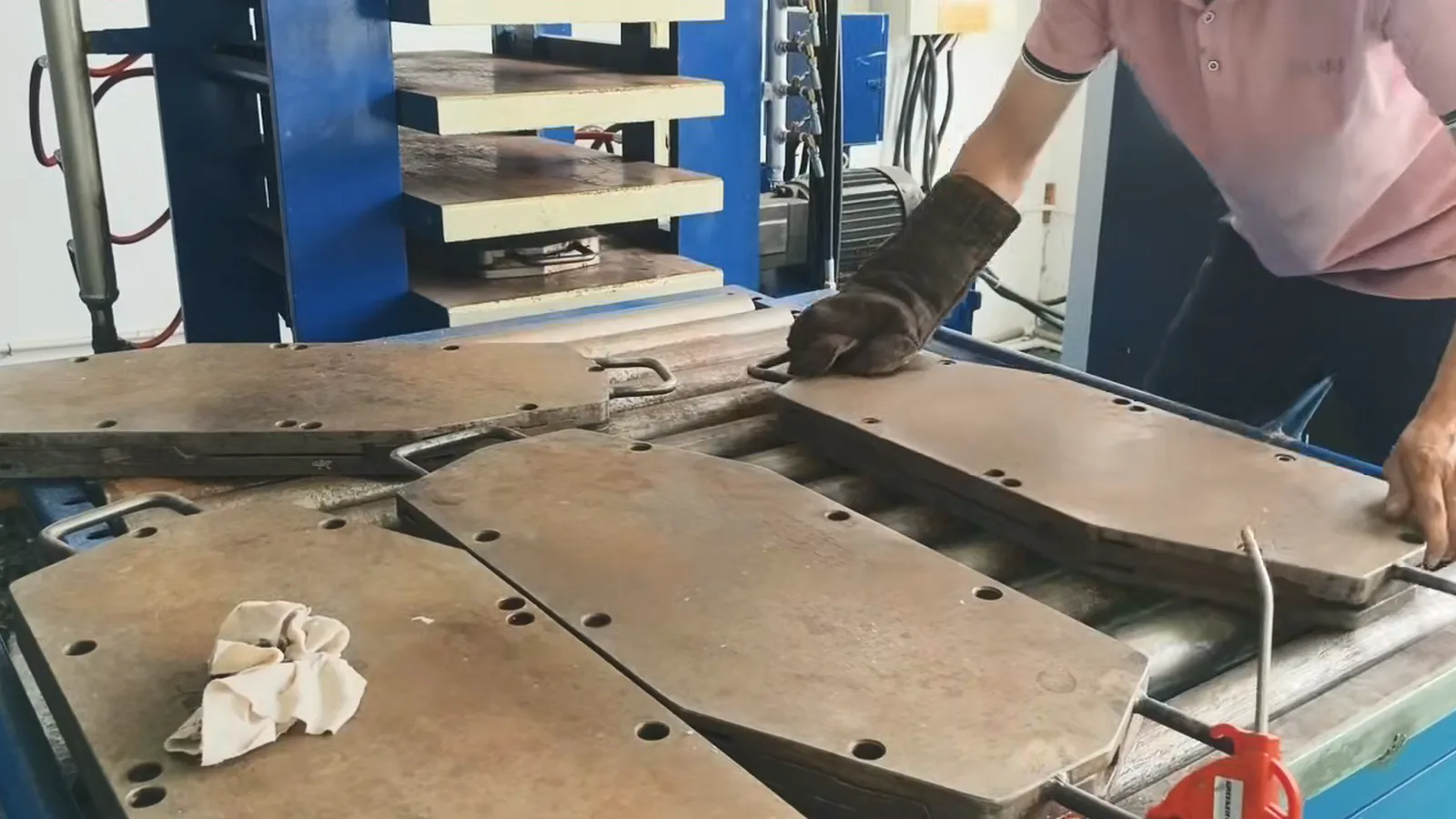
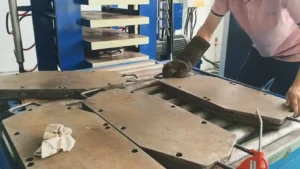
A thermoformed paddle needs a matched steel or aluminium tool for its shape. That tool is a one-time cost, and whether you make 80 paddles or 8,000 from it, the cost is the same. Industry write-ups put simple tooling adjustments in the low hundreds of dollars, while a genuinely new shape plus custom graphics setup is more often quoted in the $800–$2,500 band and frequently waived above 200 units.
Spread a $1,200 tool across 100 paddles and you have added $12 per paddle. Across 500, it is $2.40. That single line item explains more MOQ quotes than anything else.
Carbon fabric comes in fixed roll widths
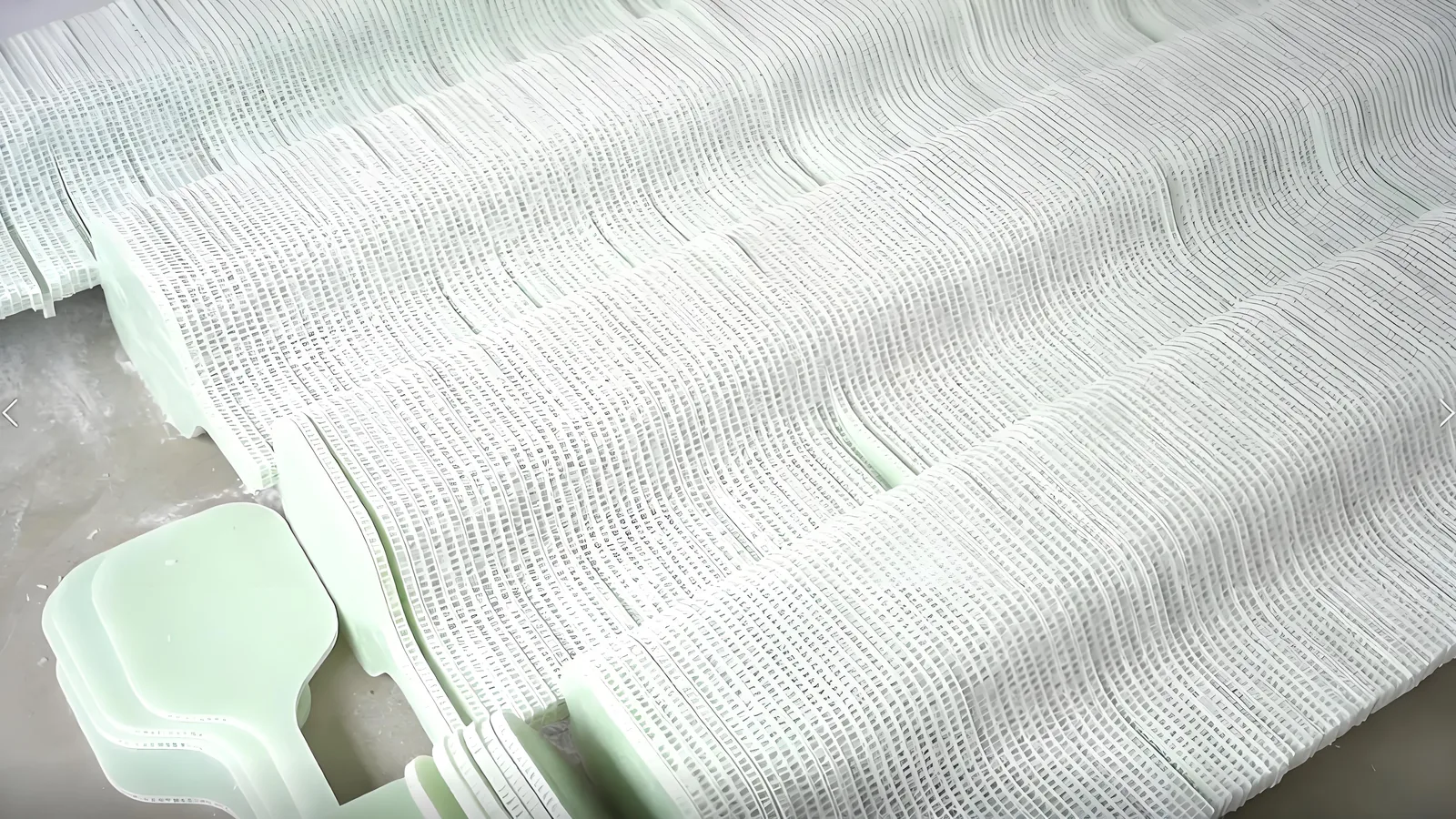
Raw carbon and prepreg are sold in standard widths — 500 mm and 1,000 mm are typical shelf sizes — and paddle faces are cut by nesting shapes into that width. The nesting pattern is fixed by the roll, not by your order size.
If you order a quantity that does not consume a whole roll, the offcut does not disappear; it sits in the warehouse until someone orders the same material. Prepreg also has a refrigerated shelf life, which is why a factory will happily run 300 pieces of a common T700 3K weave but hesitate at 100 pieces of an unusual Kevlar or titanium-wire layup. The difference between those two answers is inventory risk, not attitude.
Every decoration method has a setup cost before the first good unit
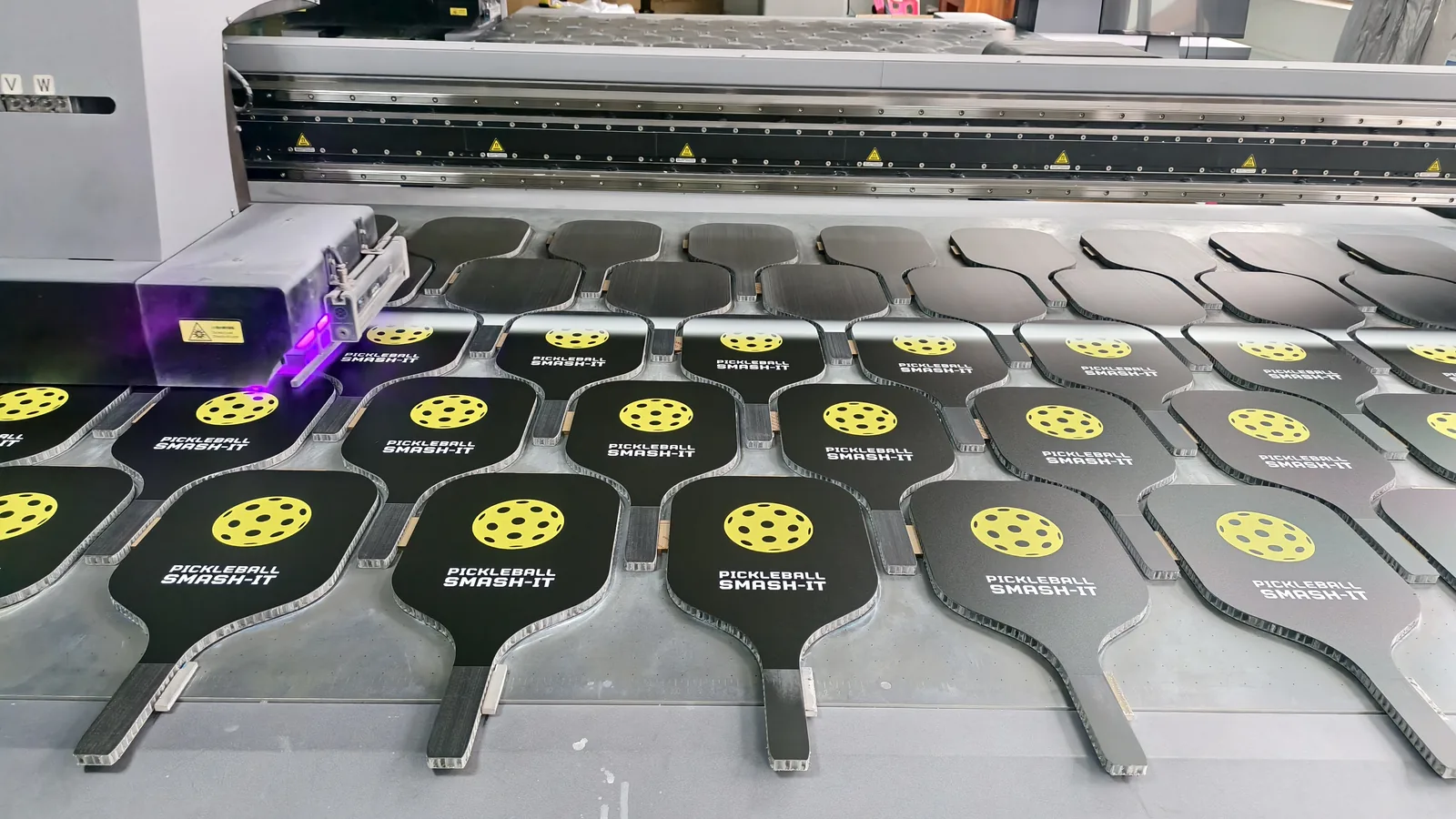
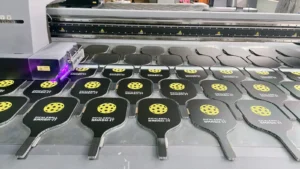
UV printing, sublimation and screen printing all need a colour-matched, registered setup, and the first several pulls off any press are scrap while the operator dials in registration and colour. On a 100-piece run you are paying for that scrap across 100 paddles.
The same logic applies downstream. Published rates for full-surface graphics sit around $2–$4 per paddle — a figure that only holds because the setup is being spread over a real run length. Halve the run and the effective rate rises even though the quoted per-unit number has not changed.
Edge guards, grips and packaging are their own production runs
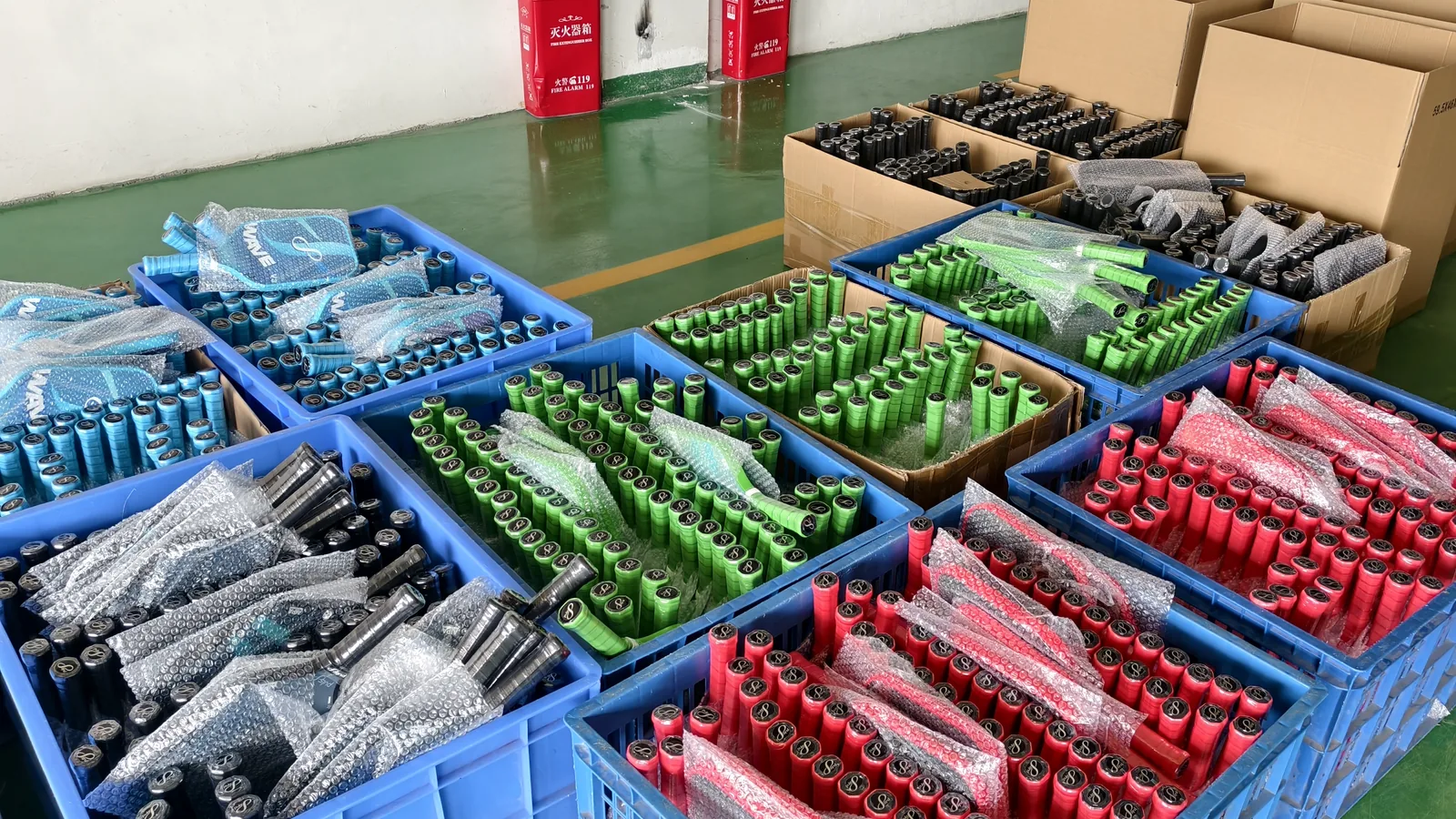
An edge guard is an extruded profile. A custom colour means the extruder has to purge the line, run your colour, and purge it again — and the purge is measured in kilograms, not grams. That is why most factories will quote one stock edge guard colour at their base minimum and charge a step-up for a bespoke one.
Colour boxes are the same story with different machinery: a printed carton needs plates or a digital setup, and print houses carry their own minimum sheet counts independent of your paddle count.
QC sampling does not scale down
Inspection is done on a sample plan — a set number of units pulled per lot for weight, balance, core bond, face flatness and drop testing. Below a certain lot size the sample is a punishing share of the order, and a single failed unit can trigger a 100% re-inspection that costs more than the margin on the job.
Certification is the extreme version of this. USA Pickleball testing has been reported at $4,500 per paddle model with eight paddles required for submission, and the UPA-A introduced a $20,000 annual manufacturer fee for 2025. Those are your costs as the brand owner, not the factory’s, and they are the single strongest argument against launching a certified model at 100 pieces.
What 100, 300 and 500 pieces actually buy you
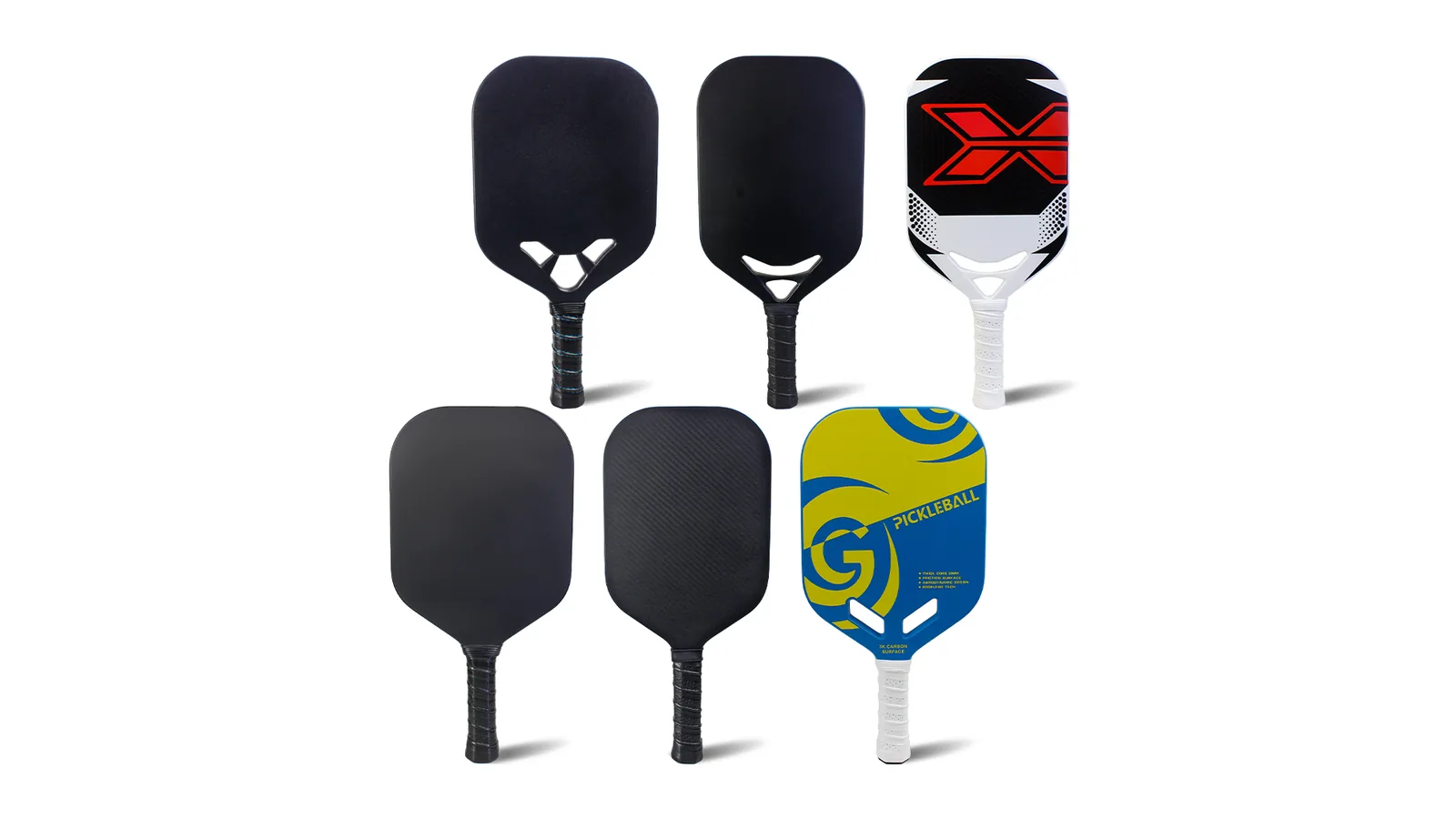
The table below reflects what published factory pricing across the industry looks like, not a Plekin quotation. Treat it as the shape of the curve.
| 100 pieces | 300 pieces | 500 pieces | |
|---|---|---|---|
| Typical unit cost position | Highest tier. Published ladders show roughly $27/pc at 100 falling to ~$24 at 400 and ~$19 at 1,000 for the same mid-tier T700 build | Mid tier; most setup fees start getting absorbed | Lowest practical tier for a first order; $22–$32 for thermoformed is a commonly published band |
| Colourways | Usually one; published 100-piece terms are often one colour combination of edge guard, grip ring and grip | Two to three variants becomes realistic | Multiple colourways, or two shapes sharing one core spec |
| Shape | Stock shape from the factory’s existing mould library | Stock shape, or a modest shape tweak | Custom shape becomes defensible; tooling often waived above 200 units |
| Edge guard / grip | Stock colours | One custom colour usually viable | Custom extrusion colour plus custom grip |
| Packaging | Poly bag or generic sleeve; stock cover | Printed sleeve or simple carton | Full printed colour box with your artwork |
| Capital at risk | Lowest — the point of a 100-piece run | Moderate | Real inventory exposure if the model does not sell |
| Best for | Validating a shape and a graphic before you scale | A second order once you know which SKU moves | A brand with existing sales data or a club/school contract in hand |
The honest framing is that 100 pieces is a market test, 300 is a first commercial run, and 500 is a decision you should be making with demand evidence rather than optimism. Explore our thermoformed paddle range to compare available constructions.
MOQ is not one number — it changes by product type
Thermoformed paddles carry the highest minimums because they carry the most tooling. A unibody edgeless Gen5 foam-core build has more fixed setup than a conventional thermoformed paddle, and the minimum follows.
Cold-press paddles generally sit lower. The cold-press process uses flat-cut faces and a bonded core rather than a fully moulded shell, so the tooling burden is smaller — which is why cold-press models are usually the easier entry point for a new brand.
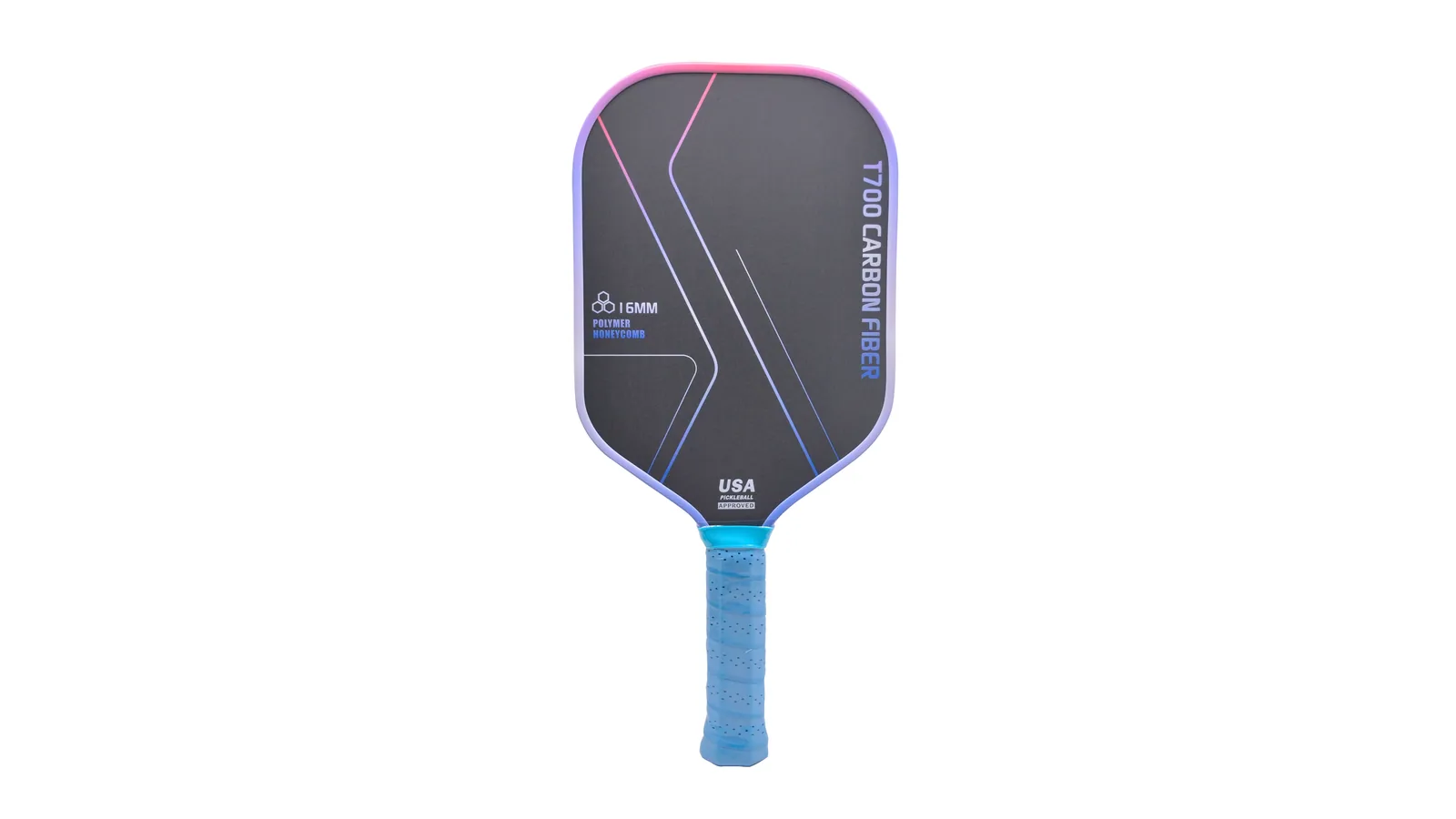
Blank paddles are the lowest of all, because there is no decoration setup at the factory at all. You buy finished, undecorated paddles and apply your own graphics locally.
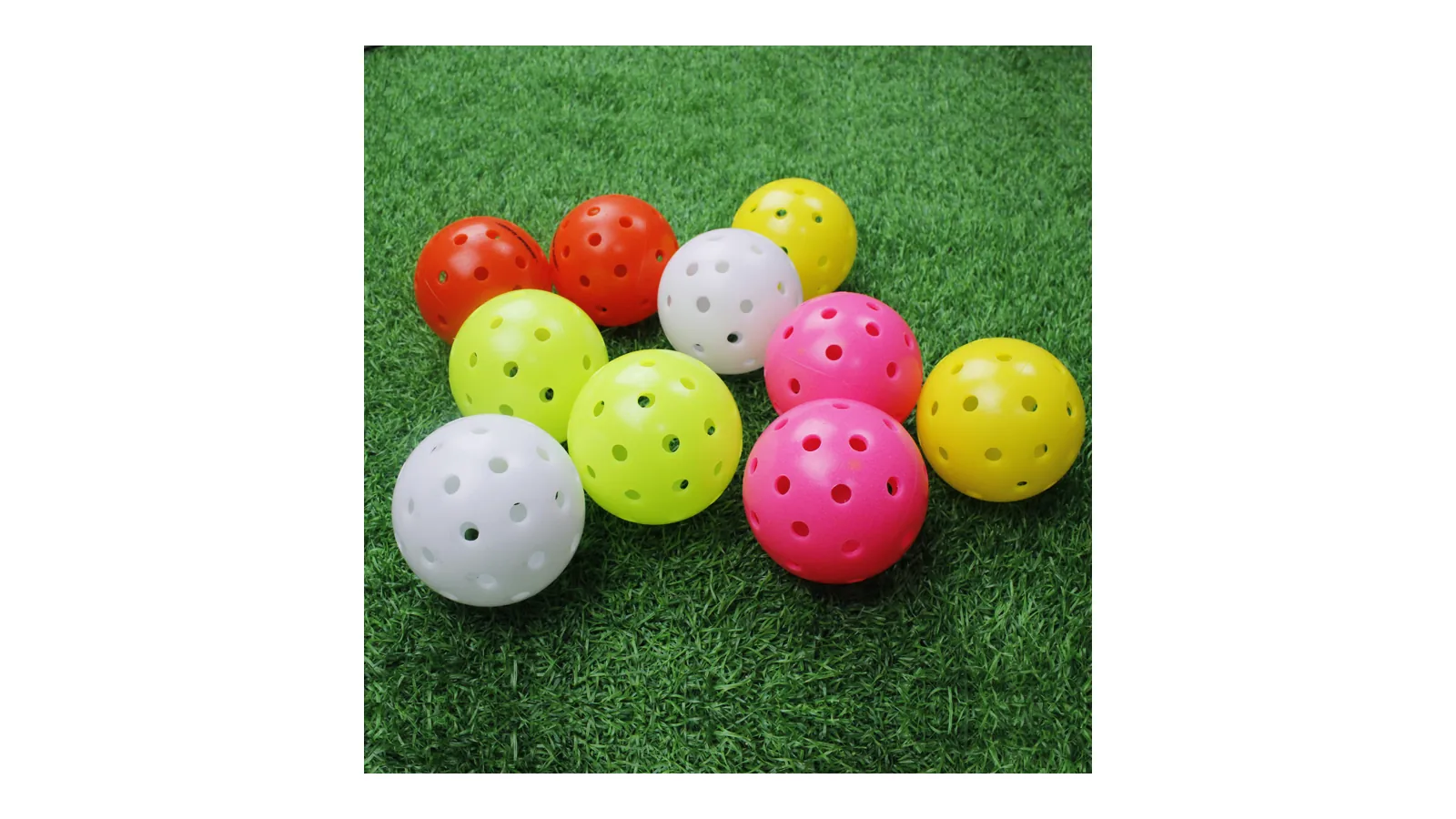
Balls behave differently again. A seamless PE or TPE ball is injection- or rotation-moulded from an existing cavity, so the paddle logic does not transfer — the binding constraint is usually the logo printing minimum, not the moulding.
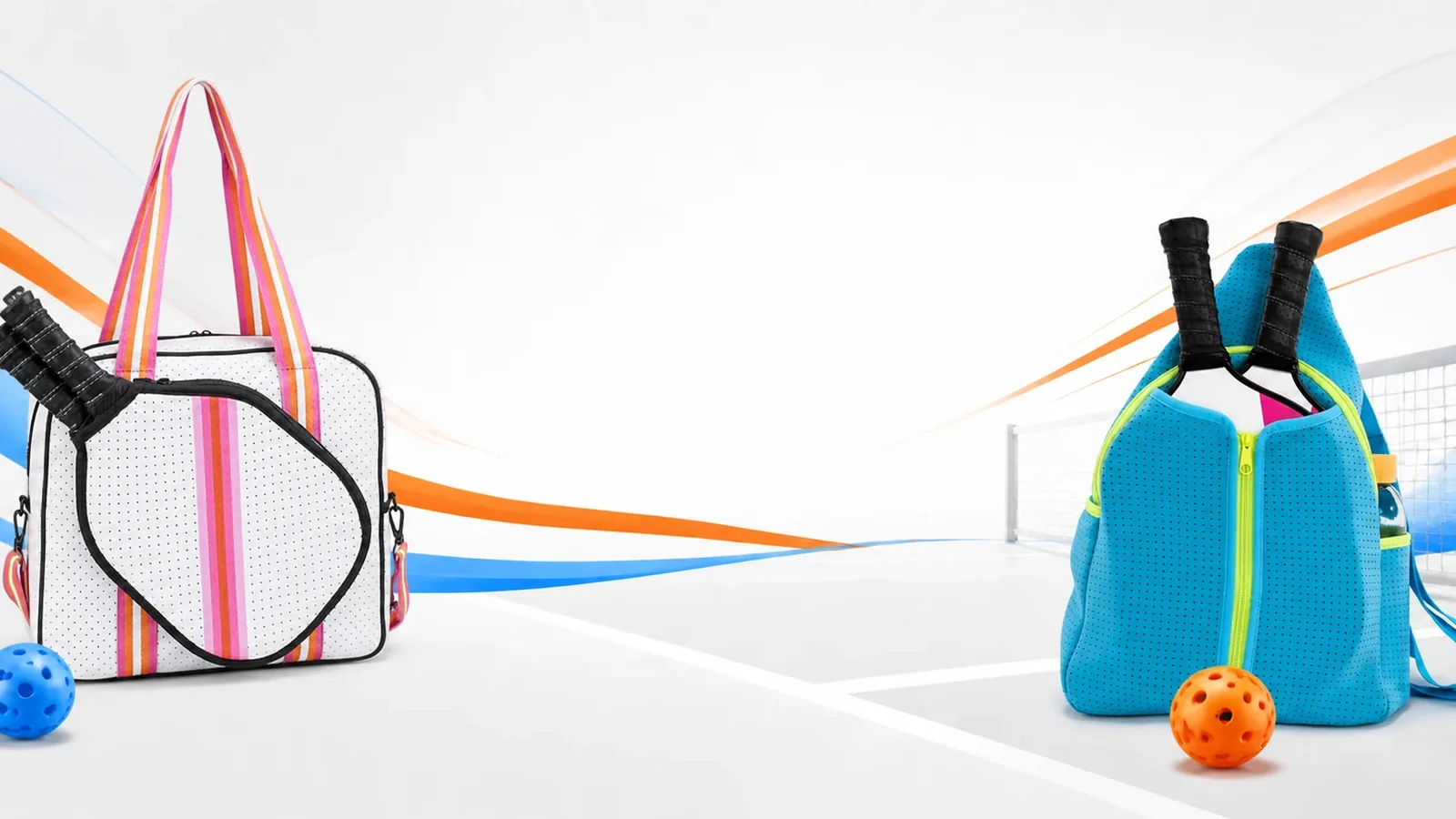
Bags and accessories follow the sewing trade’s own rules: fabric colour minimums, zipper and webbing sourcing, and embroidery versus print setup. Minimums on bags and gear are set by the fabric mill as much as by us.
Five legitimate ways to bring your minimum down
Share a mould. Use a shape already in the factory’s library instead of commissioning one. You give up shape exclusivity and get the tooling cost back — usually the single biggest lever available.
Take stock colours on the parts nobody photographs. Stock edge guard, stock grip ring, stock end cap. Your face graphic is what the customer sees; a black edge guard costs you nothing in brand terms and removes an extrusion changeover.
Buy blanks and decorate locally. If you already have a print partner in your market, blanks plus domestic decoration can beat a low-volume decorated order on both MOQ and lead time, and it lets you produce short-run designs on demand.
Combine SKUs into one order. Three paddle models at 100 each often clears a factory’s commercial threshold better than one model at 300, because several fixed costs — container, QC mobilisation, documentation — are shared across the whole booking rather than per SKU.
Start with poly bags and upgrade packaging later. Printed colour boxes carry their own print-house minimum. Launch in a simple sleeve, confirm the SKU sells, then commit to cartons on the reorder.
What we’d tell you to do on a first order
Test at the lowest quantity the build allows, with a stock shape and one colourway, and spend the money you saved on getting three to five real players hitting with pre-production samples before you approve mass production. A shape you dislike at 100 pieces is a cheap lesson; the same shape at 500 is a warehouse problem.
Then reorder on data. Once you know which weight, core and face material your customers actually buy, the case for 500 or 1,000 units writes itself — and the unit cost falls exactly where you need it to.
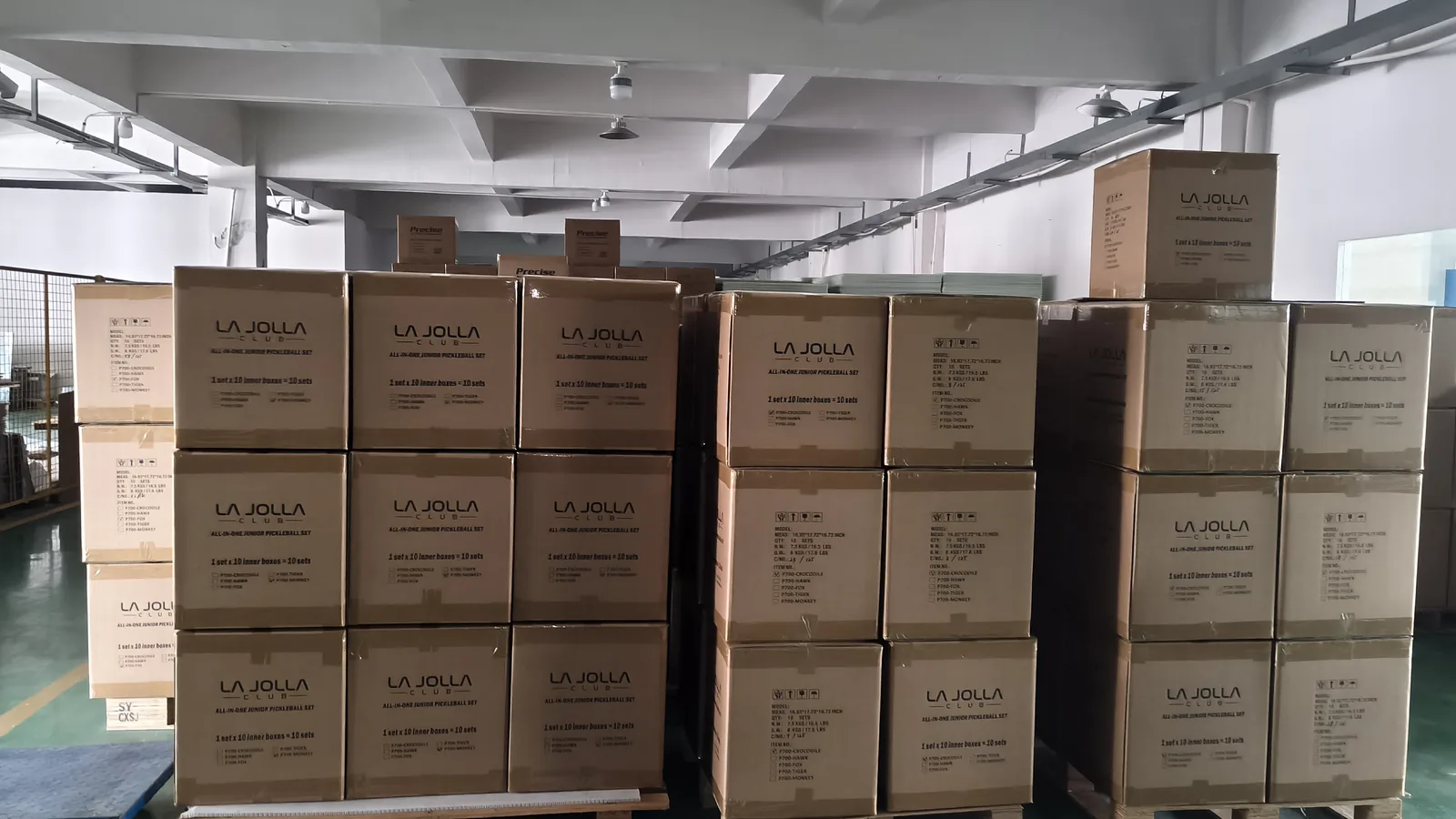
If you want a quantity-by-quantity breakdown for a specific build, our custom and OEM paddle programme covers construction, decoration and packaging options, and you can send us your spec for a quote with target quantity, core type, face material and packaging format. We will tell you where the cost breaks actually fall for your project rather than quoting a single headline number.
Frequently asked questions
What is a typical pickleball paddle MOQ for a custom order?
Most factories publish minimums in the 100–300 piece range per design, with some quoting 50–100 for thermoformed builds on existing moulds. The number depends far more on what you customise than on the paddle itself. A stock shape with a printed face sits at the low end; a bespoke mould, custom edge guard colour and printed colour box push it higher.
Why do factories charge more per paddle at 100 pieces?
Because fixed costs are spread across fewer units. Tooling, print setup, extrusion changeovers, packaging plates and QC sampling cost the same whether you order 100 or 1,000. Published ladders show the same mid-tier build moving from roughly $27 per piece at 100 units to about $19 at 1,000 — the paddle did not get cheaper, the setup got divided further.
Can I order blank pickleball paddles at a lower MOQ?
Usually yes. Blanks skip face printing, custom edge guard colours and branded packaging, which removes most of the setup costs that drive minimums up. You apply graphics yourself or through a local decorator. It is the standard route for clubs, schools and brands that want short-run or seasonal designs without committing to a full decorated production run.
Does MOQ differ between thermoformed and cold-press paddles?
Yes, and usually meaningfully. Thermoformed paddles need matched moulds and a moulded perimeter, so tooling is a larger fixed cost and the minimum reflects it. Cold-press construction uses flat-cut faces bonded to a core, which requires less dedicated tooling. Cold-press models are generally the lower-minimum entry point for a brand’s first production order.
How do I lower my minimum without losing customisation?
Use an existing mould rather than commissioning a shape, accept stock colours on edge guards and grips, combine several SKUs into one booking so shared costs spread across the whole order, and start with simple packaging. Your printed face graphic — the part customers actually see — normally stays fully custom under all of these approaches.